
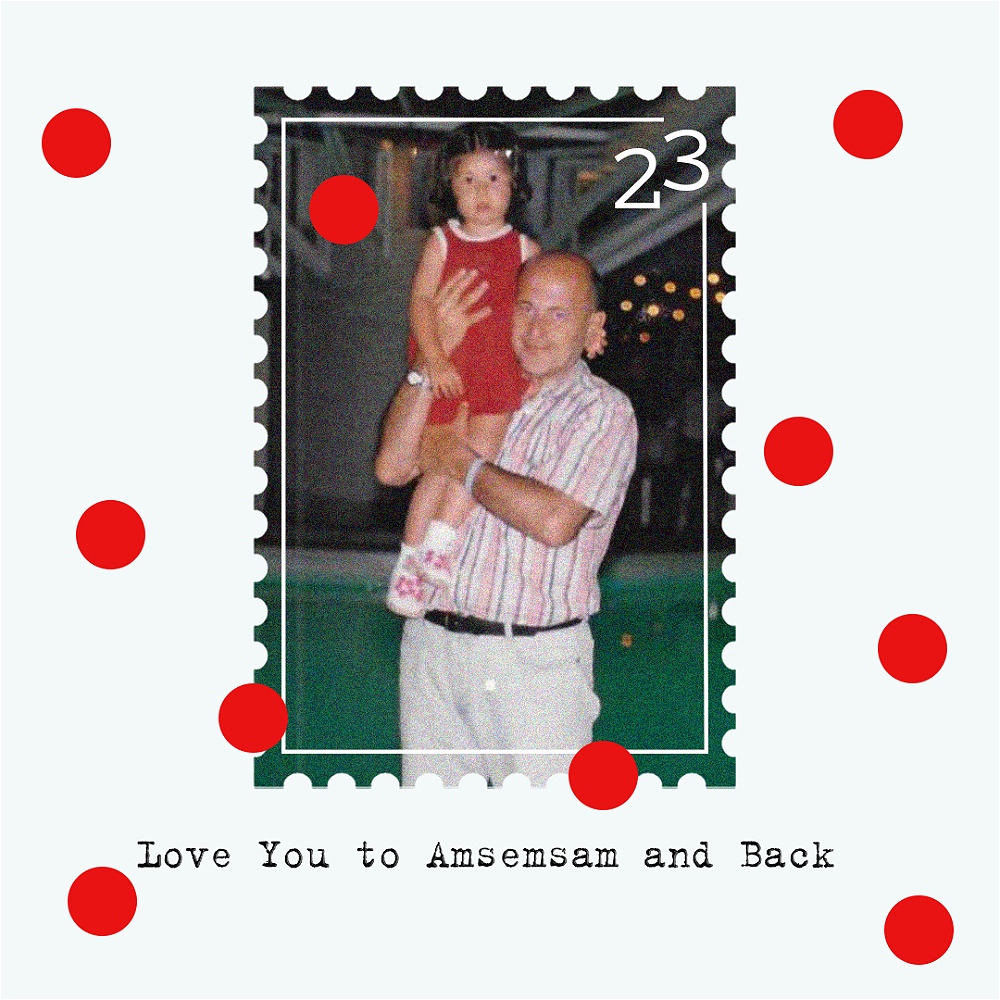
Love You to Amsemsam and Back opens Tuesday 4th August at Upstairs at the Gatehouse, sharing an intimate story about a father and daughter’s memory, distance and love. Learn more about you can expect:
1: Where did the phrase “Love you to Amsemsam and back” come from and what inspired you to created the piece around this?
As someone whose mother tongue isn’t English, sometimes words get a bit messy on the way out. That’s where “Amsemsam” came from, playing with language and how it can shift. In a way, it also reflects the confusion and fragmentation of language that can come with Alzheimer’s.
2: What drew you to explore the relationship between a father and daughter?
This is a real story, so I felt like my relationship with my dad is very layered, very emotional, and also very relatable. Dementia is a reality of today’s world, and I think a lot of people can see parts of their own experiences in it.

3: What conversations do you hope audiences might have after leaving the show?
One of the concepts we talk about is grief before the actual loss. For people who are carers or close to someone with dementia, there can be a feeling of grief while the person is still physically there but slowly losing their memories. I think it’s important that people don’t feel ashamed of that. Dementia creates this situation, but I think it can apply to other illnesses as well, where you realise there’s no way back and you start grieving.
4: It mentions the “strange geography of love”, how does the staging help create this emotional landscape?
The play is non-linear, which reflects Alzheimer’s quite well. We play with different lighting and shifts between characters to create that atmosphere and emotional world.

5: Do you think different generations may react differently to “Love you to Amsemsam and back”?
Older audiences may relate to it more directly, as they might have experienced dementia themselves or through someone close to them. For younger audiences, it can be something they haven’t fully understood before, and theatre makes it feel more real in a different way than watching it on a screen. Being in the same space as the actors, seeing it live, can make the experience easier to grasp and more immediate.
6: What has been the most enjoyable part about making “Love you to Amsemsam and back”?
We really enjoyed finding moments of joy within such a heavy topic. It was something I was worried about as a writer, that it might feel too dramatic, but we found a good balance both in the rehearsal process and in the final piece.
Love You to Amsemsam and Back opens Tuesday 4th August at Upstairs at the Gatehouse. Many thanks to Elif Çevikel for answering our questions. Book you tickets here!
Leave a Reply