
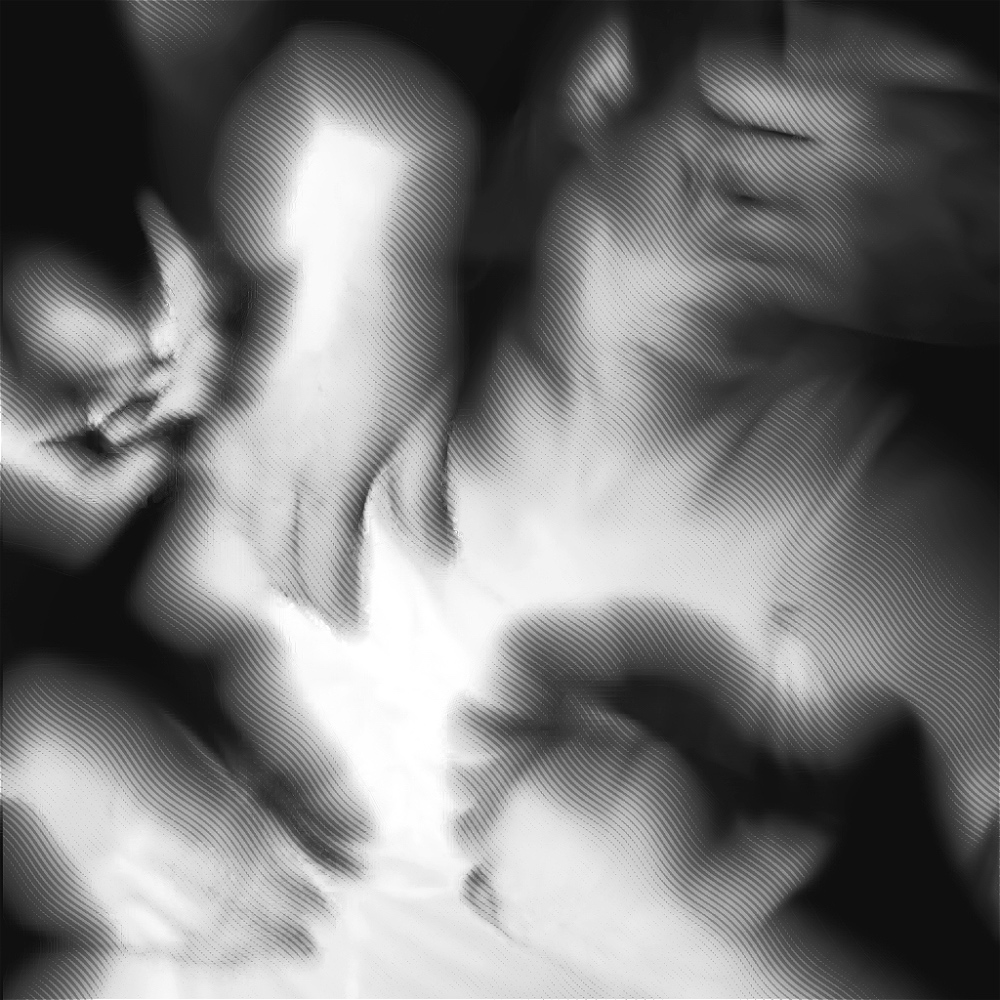
BETWEEN > 1 opens at The Courtyard Theatre on Friday 7th August, bringing powerful contemporary dance around fears and desires. Learn more about what you can expect:
1: What was the initial spark of inspiration for BETWEEN > 1?
Zoe: The initial spark came from a question that stayed with me for a long time: Why do people who have physically left their childhood environment often find themselves returning to the same emotional patterns in their intimate relationships later on in life?
As I explored this question, I became increasingly intrigued that our bodies often respond before conscious minds intervene. A moment of silence, a shift in tone, any subtle change, or the possibility of being abandoned can trigger an immediate bodily reaction.
This became the foundation of BETWEEN > 1. Although Nerve believes she has left her past behind, her body continues to inhabit the relational patterns it learned in childhood. She resists being controlled, yet her embodied experience has taught her that obedience can sometimes feel more bearable than abandonment. This paradox became the conceptual foundation of the work. For me, this became the starting point of the work: the past does not exist solely as memory; it also lives on in our gestures, our habits, and our body’s involuntary responses.
2: How do you balance abstract dance with storytelling so audiences are able to emotionally connect with Nerve and Organ?
James : Storytelling is at the core of my work, and dance is the way I deliver stories and emotions to audiences. Moments of joy, anger, fear and vulnerability in life are my main sources of movement inspiration and fuel for choreography. I find that when choreography grows out of these emotional states, it tends to resonate easily with performers, which in turn allows audiences to form a stronger emotional connection with the work.
In BETWEEN > 1, I first shaped the scenario with clear, structured movement between characters, so the story could establish its own framework. I then layered in further choreography around key emotional moments, where abstract dance leads the way and draws audiences into a deeper, more sensual and intimate world. This is what makes the work distinctive and compelling, and what allows audiences to become emotionally hooked with Nerve.
3: The production has a different writer and choreographer. How was this collaboration progress?
Zoe: Writing BETWEEN > 1 was itself an artistic challenge. Although the work follows the structure of a conventional script, much of the writing extends beyond dialogue. Instead of focusing solely on dialogue, I also wrote about Nerve’s embodied experience; how anxiety settles in the body, how pain travels through her, and how her body responds before conscious thought can intervene.
These passages often felt closer to literary writing than conventional script, as they attempted to articulate experiences that are hard to articulate in language. I would then share these texts, together with the character’s psychological state and the dramaturgical intention of each scene, with James. He turned them into movement, exploring how these internal states could be embodied through choreography and the relationships between the performers.
Witnessing emotions that had previously existed only on the page emerge through the performers’ bodies was one of the most rewarding parts of the creative process. It revealed possibilities that neither writing nor choreography could have achieved independently.
James : In the preparation phase, Zoe and I spent a long time reading through the script together, clarifying the relationships between characters, the specific emotions that might be triggered at particular moments, and what each character would do in those situations. This phase established a foundation for my work with the dancers, making sure they embodied their character when they were moving, speaking, and dancing. Because the text will be pre‑recorded, we also discussed how to adjust the length of lines and paragraphs so the text could serve both the music and the movement. Overall, it was a genuinely enjoyable collaboration that challenged us to think more deeply about the interplay between text and movement.
4: The show relies of visual metaphors. Could you explain how the set, lighting and costumes support the emotional landscape?
Zoe: The set initially appears as an ordinary domestic interior, with a bed, a table, chairs, and objects associated with Nerve’s childhood. However, it is not intended to represent a realistic home, but rather a space constructed from memory and psychological experience. As the past increasingly intrudes upon the present, the space begins to transform. Objects are displaced, paint accumulates on bodies and surfaces, and familiar furniture gradually becomes a mechanism of restriction.
One of my favourite moments is when Shell restores the room to order. While tidiness is often associated with safety, here it becomes oppressive. His actions do not simply reorganise the space; they symbolically erase what Nerve has just expressed, experienced, and resisted.
The lighting follows a similar trajectory. It begins with an intimate and localised focus before gradually expanding into shadow, dissolving the boundaries between body, memory, and space. By the end of the work, the lighting no longer functions solely as atmosphere but exposes the theatrical architecture itself, suggesting that control is no longer embodied by a single character but has become embedded within the space.
The costumes further articulate these relationships. Although both Organ and Shell wear formal clothing, their silhouettes communicate different forms of authority. Organ’s softer, looser tailoring retains a sense of intimacy and emotional accessibility, whereas Shell’s sharper, more structured silhouette conveys a more rigid and institutional form of control. Through these subtle differences, we wanted the audience to perceive the distinction between care and domination through the body itself, rather than through dialogue alone.
5: Trauma and mental health are emotionally charged topics. What would you like audiences to understand about your art?
Zoe: Rather than offering a definitive resolution, we chose to end BETWEEN > 1 with ambiguity. In a conventional narrative, Nerve might either overcome her past or succumb to it. Neither felt truthful to the experience we wanted to explore.
For many people, healing is neither immediate nor linear. Even when the original danger has passed, embodied patterns of survival can persist, shaping how intimacy is experienced and how choices are made. Knowing that a relationship is harmful, or understanding the origins of one’s trauma, for me it does not necessarily dissolve these deeply ingrained responses.
For this reason, I want to leave this story with an open ending. Her silence, obedience, and fear of abandonment might not be signs of weakness, it could be survival strategies that once enabled her to endure. The work wants to question how embodied responses might continue to structure experience throughout life time. Rather than resolving Nerve’s struggle, it acknowledges that some cycles resist closure, and that the ongoing negotiation between past and present is itself a lived reality.
6: What has been the most enjoyable part of creating BETWEEN > 1?
James : I would say that watching the story move from page to stage – taking a script that is anything but straightforward or conventional and seeing it become an actual dance theatre work over several rehearsals – has been the greatest joy in this process. I am deeply grateful to our hardworking dancers and crew, who have been tirelessly ensuring that every detail is treated with care and precision. Another joy has been how often my dancers and I have listened to the voice‑over; we’ve heard it so many times that we now naturally find ourselves quoting parts of the script without even noticing. Being able to work on this production has been pure joy and a genuinely life‑changing experience for me.
BETWEEN > 1 opens on the 7th August at The Courtyard Theatre. Many thanks to Zoe and James for answering our questions. Book your tickets here!
Leave a Reply