
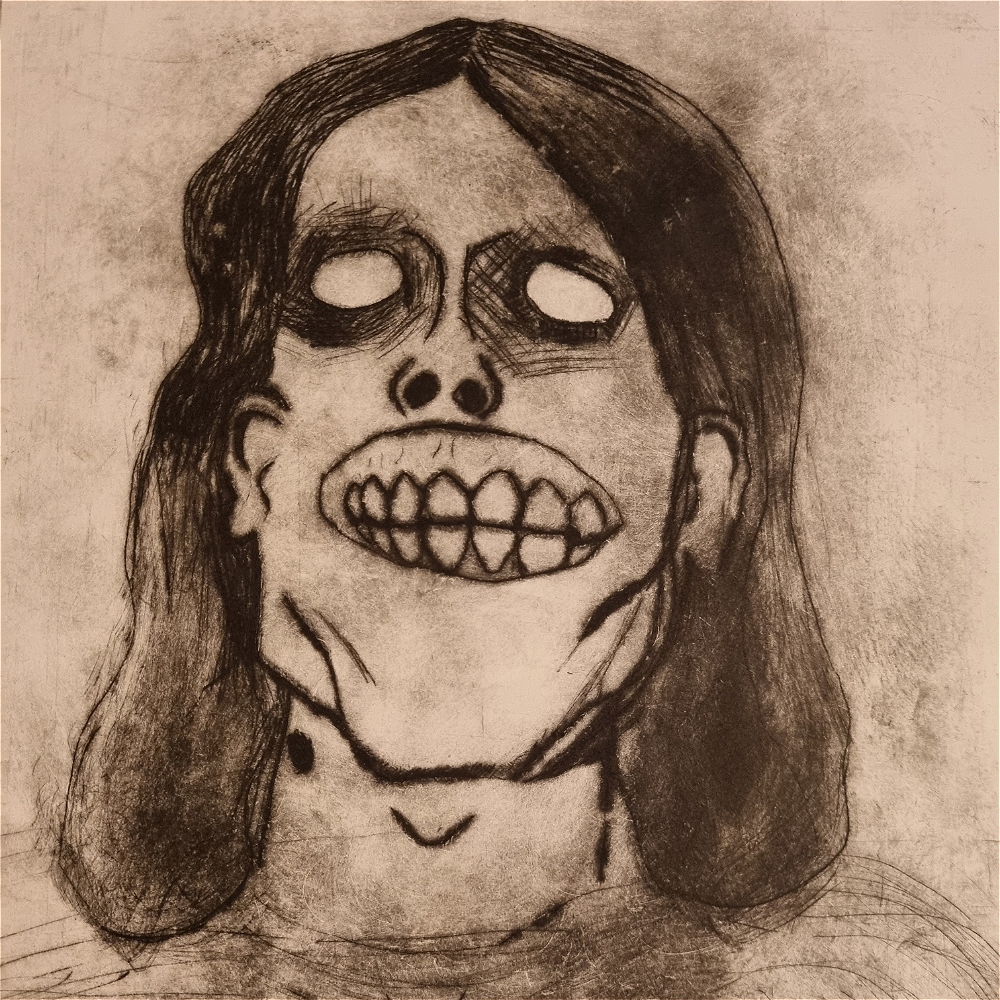
And Kill Him in the Shell opens Monday 17th August at Canal Cafe Theatre, exploring a double bill about identity, deception, alienation and the material value of time. Learn more about what you can expect:
1: What first inspired you to create this production?
Byron: I originally began writing Mt Glorious after a breakup when I was stuck on a boat for a week with my mother, my brother and their partners. Both couples were on the precipice of breaking up, and as a result they were always fighting. It was a very tense environment, but I was surrounded by the most beautiful islands and spent my days swimming amongst the great barrier reef. I became hyper aware of my escape mechanisms and Mt Glorious was a way for me to explore that.
Leonardo: In the ER, I was waiting for them to finish my friend’s examination, who, after a long week of swaying to and from debauchery, was vomiting blood; nearly 4am and midwinter black seeping in through the automatic doors. Two young actors from across the many oceans with no one to call but each other and no one to blame but themselves, waiting to hit a seven on the dice, and there I am shrugging it off, thinking ‘these are just things that happen in the small hours of the morning’. And so I thought about a play where I could discuss the always imminent chaos of a life driven by unreasonable, unshakeable choices. That’s how The Small Hours happened.
2: How do the two plays speak to each other?
Rather than telling one linear story, Mt Glorious & The Small hours were written as companion pieces. Two separate vignettes of a generation living on the edge. If the world is ending, why should we watch?
3: Why was a one-person psychological thriller right for Mt Glorious?
It’s an incredibly personal story. I wrote Mt. Glorious as a one-person show because it’s a way for me to share a part of myself with the world that I’m ashamed to share. I decided on the psychological thriller genre because the play explores a universal aspect of the human condition that we, as a society, try to hide.
4: What attracted you to the dark-comedy style of The Small Hours?
When dealing with heavy elements I find it best to approach them with lightness. In such opposition more colours are found. The Small Hours is dark, because the themes inevitably are, and it’s a comedy, because tragedy is implied. However, the lines are not so clearly demarcated, and by the end of the play it will be up to the audience to decide what The Small Hours is, and what it means.
5: Has there been any challenges in bringing both pieces together?
The challenges have been mainly logistical. We’ve found the plays complement each other brilliantly. Byron is in both of them, so the exercise for de-rolling and very swiftly diving into a new world, however similar, is always a delicate matter that requires ample practice. Equally, there’s a responsibility with the room that the second play must fulfil. Energy has been expended and is lingering, so The Small Hours doesn’t (and can’t) quite start as a play from scratch, there’s already something to respond to.
6: What has been the most enjoyable part about creating And Kill Him in the Shell?
The project is entirely self-created and self-funded. Acting, producing, promoting and co-directing, although strenuous in conjunction, have stretched our artistic capabilities beyond expectations. Ultimately, the best part is the care the craft requires and deserves, we’ve sat for hours upon hours making a ceramic vase. And then, in the rehearsal room, the last line was said, and before notes, with looked at each other with pride in our eyes.
And Kill Him in the Shell opens Monday 17th August at Canal Cafe Theatre. Many thanks to Byron and Leonardo for answering our questions. Book your tickets here!
Leave a Reply